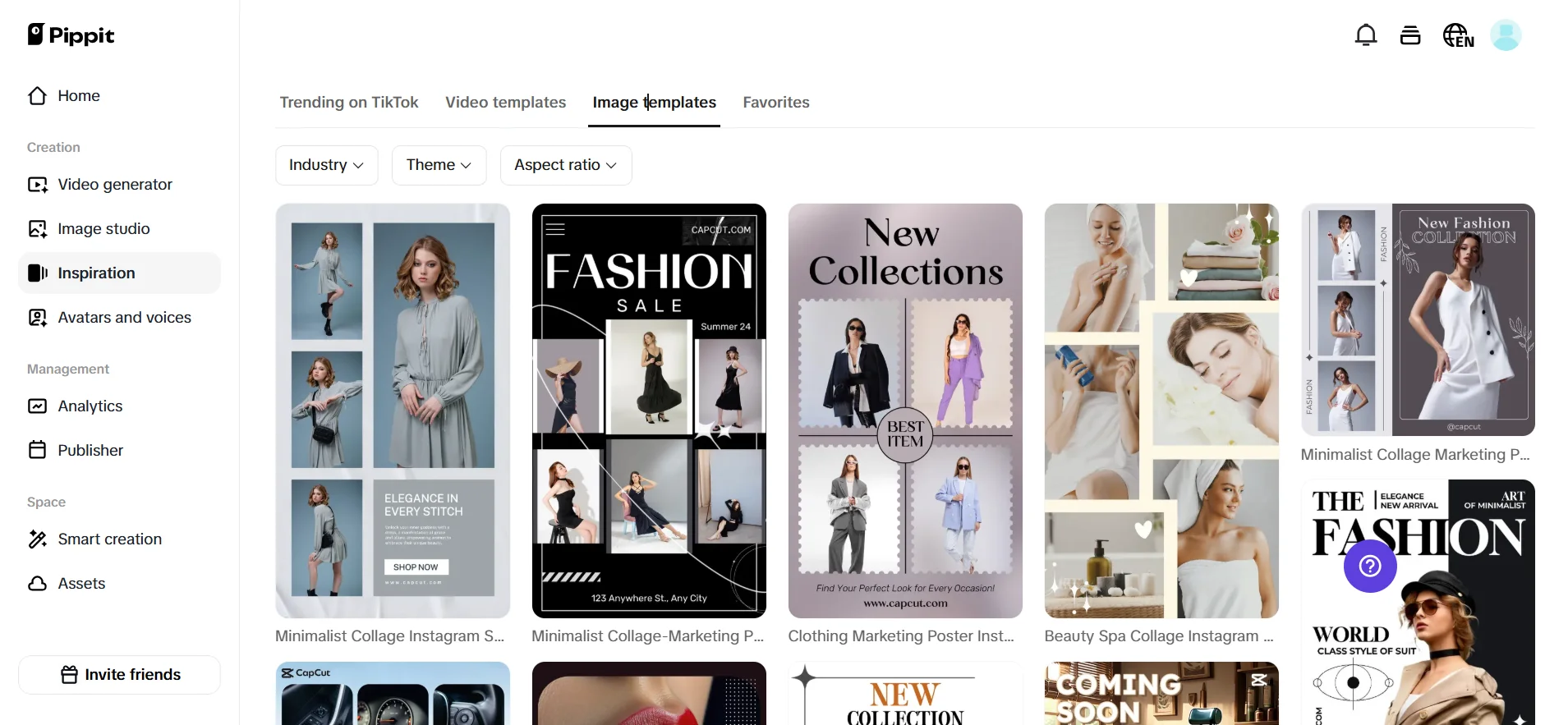
Design is no longer left for designers alone. Today, founders, marketers, and creators with zero formal training produce visuals that look polished and professional-and all too often, it starts with a transparent background maker.
Thanks to tools like Pippit, non-creators can instantly remove clutter, isolate the key subject, and create clean graphics for social posts, presentations, or brand assets. Instead of wrestling with complicated software, they focus on storytelling and layout, turning simple ideas into visuals that feel intentional, consistent, and ready to impress.
It’s not about knowing software. It’s about removing friction, starting with the background.
The confidence gap that non-designers don’t talk about
Those people who say, “I am not creative,” are not struggling to find ideas. They are struggling to feel confident with the execution. They understand what it is that they want to communicate, but they don’t know how to communicate it in a way that makes it seem like it was a deliberate act.
This ambivalence results in:
- Overcrowded visuals
- Using too many fonts and/or colors
- Intuitive Design
- Design that appears to be accidental, not planned
Taking out the background may be the first point in the process where non-designers feel control instead of confusion.
Why transparent visuals feel instantly professional
Clean cut-out changes perception. Where the background disappears, the subject gains clarity, focus, and flexibility. Even simple layouts start to feel designed.
Non-creators catch this shift out of the corner of their eye. The same image that felt amateur suddenly feels ready for:
- A website hero
- Social post
- A slide
- A promo graphic
That transformation gains momentum.
How beginners accidentally discover good design principles
Surprisingly, clear graphics teach the basics of design without design training. By elaborating on cutouts, nonspecialists naturally acquire a feel for:
- Visual hierarchy, because the subject stands out.
- Negative space, because there’s room to breathe.
- Balance, because placement matters more than decoration.
They’re not learning theory; they’re learning by doing it.
The quiet power of not starting from scratch
One of the biggest design mistakes that beginners have is starting on a blank canvas. Transparent assets eliminate that fear.
When you’re starting with a clean subject, decisions feel lighter. You’re placing, not inventing. You’re adjusting rather than guessing.
That shift makes design feel approachable instead of intimidating.
Where transparency is situated within work processes
Non-creators don’t design for enjoyment—they design out of necessity. The insertion of transparent backgrounds has a natural place within real-world design projects.
- The founders apply them to make pitch visuals.
- They are used for social purposes and ads by marketers.
- They are utilized for brand identity development.
Because assets are repeatable, the process multiplies as opposed to recycling every time.
When simplicity triumphs over decoration
Non-designers have had a major wake-up call learning that sometimes—and in graphic design it is often true—less is indeed more.
Clean visuals do not require much processing or text, and many teams opt to simplify visuals once they are reused or remove text from video clips so that the visual is versatile regardless of the context in which they will be used.
Instead, clarity is what is sought after.
What non-creators love most about transparent assets
“Transparent” visuals eliminate the element of guesswork. It’s easier, in effect, to produce what feels right without being able to say why.
Non-designers usually point to:
- Faster turnaround time
- Fewer Revision Cycles
- More flexibility and ease of modification
- Less Increasing confidence sharing pictures publicly
It is an attitude that can be contagious—it spurs experimentation.
How transparent backgrounds create a design gatekeeping silence
Conventional design tools presuppose expertise. Transparent background tools presuppose intent.
When non-creators can single out an object within seconds, they stop regarding design as an area of specialization but as communication itself. This kind of attitude is highly effective.
A transparent background creator does not offer training on typography and color concepts. The largest visual obstacle removed by it, however, is clutter.
Why “looking professional” isn’t about perfection
Professional visualizations aren’t foolproof–they are consistent, understandable, and deliberate. Opacity allows non-designers to accomplish the bare minimum without stress.
When visuals seem intentional, a change occurs in audience reactions. Trust is built. Engagement is enhanced. Credibility is established.
Without a degree in design.
Pippit makes visual confidence accessible
Pippit isn’t about making everyone a designer. It is about enabling individuals to communicate visual ideas with ease and confidence, rather than feeling limited or doubting any decision made.
Thanks to Pippit and the use of storyboarding tools like its AI storyboard generator, non-creators are starting to think in visual terms without having to learn design principles.
Pippit simplifies background removals and asset creation, allowing non-creators to easily express their story without being burdened by tooling.
It is this freedom that ensures all the outcomes appear professional.
Design without designers is the new normal
With the reduction in creative hurdles presented by AI tools, the distinction between the “designer” and the “non-designer” is increasingly blurred. What is now imperative is the clarity of the message rather than the skills involved.
One of the simplest methods of blurring that line, and one that, when crossed, proves impossible to turn back, is having transparent backgrounds.
Ready to create beautiful graphics without needing a professional designer? Check out Pippit and get designing with confidence – even if creativity has never been something that has been a part of your skill set!